Requirements to Become a Surgical Technologist (USA & UK): A Complete Guide
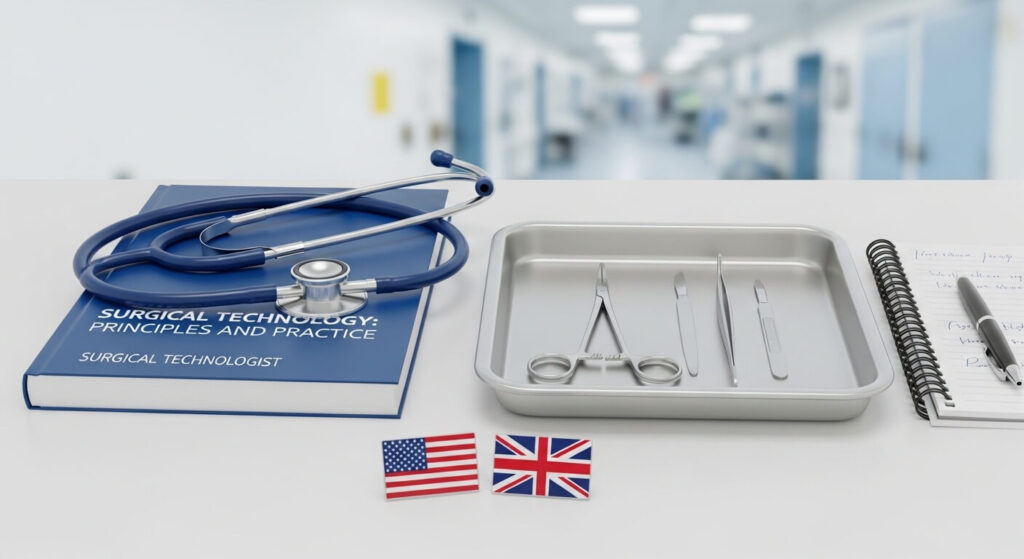
Requirements to Become a Surgical Technologist (USA & UK) A Complete Guide
Introduction
Before choosing surgical technology as a career, one of the most important things to understand is the eligibility and requirements. Many students assume that becoming a surgical technologist follows the same path everywhere, but the reality is slightly different. Requirements vary by country, healthcare system, and employer expectations.
For medical students, healthcare aspirants, and professionals planning an international career, understanding the requirements in the USA and the UK is especially important. These two regions have strong healthcare systems and offer good opportunities for surgical technologists, but their entry paths are not identical.
This article explains, in a clear and practical way, what is required to become a surgical technologist in the United States and the United Kingdom, including education, training, skills, and professional expectations.
Who Can Become a Surgical Technologist?
Surgical technology is an accessible healthcare career, but it still requires a strong sense of responsibility and discipline. Individuals who are interested in working in operating rooms, supporting surgical teams, and following structured protocols are generally well suited for this role.
Most successful surgical technologists share common traits such as attention to detail, the ability to stay calm under pressure, and comfort working in fast-paced medical environments. Academic excellence is helpful, but commitment and reliability are equally important.
Basic Educational Requirements (USA & UK)
The first requirement to become a surgical technologist in both the USA and the UK is completing basic education. Candidates must demonstrate that they have the academic foundation needed to handle medical and healthcare training.
In most cases, this includes completion of secondary education or its equivalent. A background that includes basic science subjects is often preferred, as it helps students understand healthcare concepts more easily.
While advanced degrees are not required at entry level, basic academic readiness is essential.
Education Path in the United States
In the United States, surgical technologists typically follow a formal education pathway designed specifically for operating room support roles. These programs are offered by accredited institutions such as community colleges, technical schools, and healthcare training centers.
Education programs in the USA generally include:
- Classroom instruction focused on surgical procedures and safety
- Practical training in controlled lab settings
- Clinical experience in hospitals or surgical centers
Most programs take between 12 and 24 months to complete, depending on whether the student chooses a certificate, diploma, or associate degree option.
Accreditation of the program is very important in the USA, as employers often prefer graduates from recognized institutions.
Certification Expectations in the United States
While certification is not always legally mandatory in the USA, it is strongly recommended. Many employers prefer or require certified surgical technologists because certification demonstrates professional competence and standardized training.
Certification improves job prospects, earning potential, and long-term career growth. Students often prepare for certification either during their education program or shortly after graduation.
For medical students or professionals planning to work in competitive healthcare environments, certification is considered a major advantage.
Education Path in the United Kingdom
The pathway to becoming a surgical technologist in the UK is structured differently. In the UK, similar roles are often referred to as theatre support workers or operating department support staff, and training is closely linked to the National Health Service (NHS).
Education and training in the UK often involve:
- Healthcare support or theatre-based training programs
- Workplace learning within hospitals
- Formal qualifications linked to healthcare support roles
Instead of standalone surgical technology degrees, many professionals enter the field through healthcare support pathways and then specialize in operating room environments.
Professional Training and Experience in the UK
In the UK, practical experience plays a very important role. Many individuals begin by working in healthcare settings and gradually gain experience in surgical environments.
Training is often provided directly through hospitals or healthcare institutions. This approach allows candidates to learn while working and to understand real operating room procedures under supervision.
Because of this structure, employers in the UK place strong emphasis on practical skills, reliability, and teamwork rather than just academic qualifications.
Skills and Personal Requirements (Both Regions)
Regardless of location, certain skills and personal qualities are essential for anyone who wants to become a surgical technologist.
These include:
- Strong attention to detail
- Ability to follow instructions precisely
- Physical stamina for long procedures
- Clear communication skills
- Ability to work calmly under pressure
These qualities are often assessed during training and practical experience rather than through written exams alone.
Health, Background, and Safety Requirements
Because surgical technologists work in sensitive healthcare environments, additional requirements often apply in both the USA and the UK.
These may include:
- Health screenings to ensure fitness for clinical work
- Background checks for patient safety
- Compliance with workplace safety standards
- These steps are designed to protect patients, staff, and healthcare institutions.
- Differences Between USA and UK Requirements
Although the core role is similar, the approach to becoming a surgical technologist differs between the two countries.
In simple terms:
- The USA focuses more on formal education programs and professional certification
- The UK emphasizes workplace training and healthcare support pathways
- Understanding these differences is important for students planning to work internationally or comparing career options.
Can International Students Become Surgical Technologists?
International students can pursue surgical technology careers, but requirements vary depending on immigration rules, credential recognition, and local regulations.
In the USA, international students must ensure that their education programs are recognized and that they meet work authorization requirements. In the UK, international candidates often need relevant healthcare experience and must meet employment and visa conditions.
Planning ahead and researching local requirements is essential for international applicants.
Common Mistakes Students Should Avoid
Many aspiring surgical technologists make avoidable mistakes during career planning. Some enroll in non-recognized programs, while others underestimate the importance of practical training.
- It is important to choose accredited education paths, gain real clinical experience, and understand employer expectations before committing to a program.
- Careful planning saves time and improves long-term career success.
(FAQs)
Do I need a medical degree to become a surgical technologist?
No. A medical degree is not required. Surgical technology follows a separate education and training pathway.
Is certification required in the USA?
Certification is not always legally required, but most employers strongly prefer certified candidates.
Can I become a surgical technologist in the UK without hospital experience?
Most UK pathways emphasize workplace learning, so healthcare experience is usually expected.
Are the requirements the same worldwide?
No. Requirements vary by country, healthcare system, and employer.
Is surgical technology suitable for medical students changing careers?
Yes. Many medical students explore surgical technology as a focused and practical healthcare role.
Final Thoughts
Becoming a surgical technologist requires commitment, discipline, and proper training, but it does not require the long educational timelines associated with many medical careers. Both the USA and the UK offer viable pathways into this profession, each with its own structure and expectations.
For medical students, healthcare professionals, and serious career planners, understanding these requirements clearly is the foundation for making confident and informed decisions. With the right preparation, surgical technology can be a stable, respected, and rewarding healthcare career.
Disclaimer:
”The information provided on this website is for general informational and educational purposes only. All content is published in good faith and is intended to offer helpful guidance to readers worldwide. However, we make no guarantees about the completeness, reliability, or accuracy of the information presented.”