AI Robotic Spine Surgery: How Artificial Intelligence is Transforming Modern Spine Care in 2026
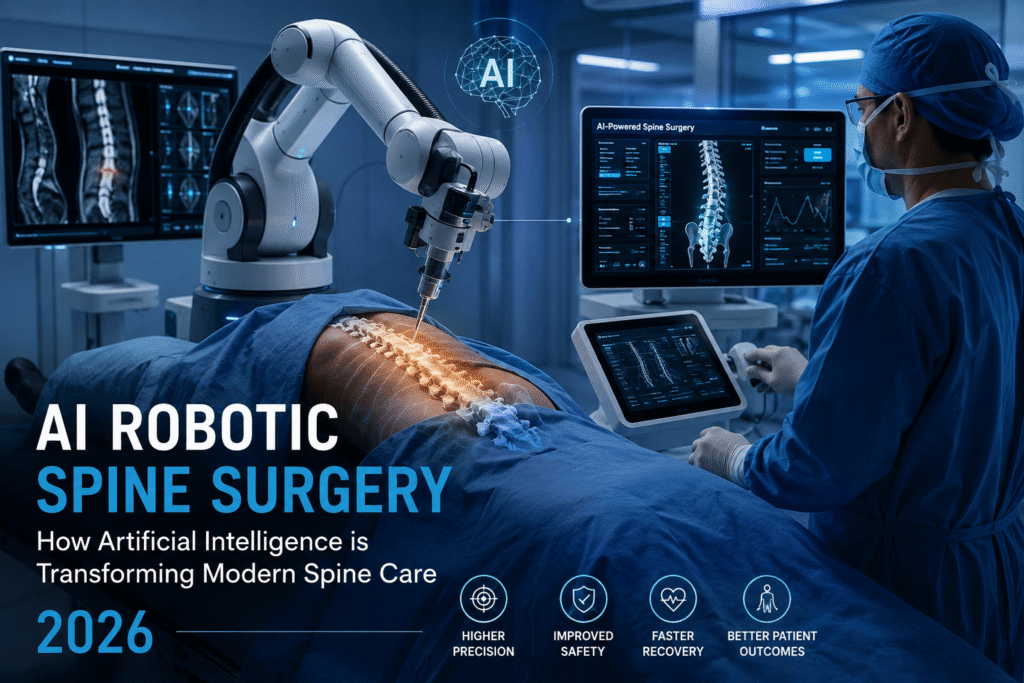
AI Robotic Spine Surgery How Artificial Intelligence is Transforming Modern Spine Care in 2026
Introduction
Spine surgery has changed more in the last decade than in the previous fifty years combined. What used to rely heavily on manual precision, surgeon experience, and conventional imaging is now moving toward a hybrid model powered by artificial intelligence and robotics.
In 2026, healthcare systems in the USA and UK are increasingly adopting AI-assisted surgical tools to improve accuracy, reduce complications, and support minimally invasive procedures. This shift is not just about upgrading tools, it represents a broader move toward precision medicine where every decision is guided by patient-specific data.
Robotic systems now assist surgeons in real-time, while AI algorithms analyze imaging, predict risks, and help plan surgeries before the first incision is made. Hospitals like UC San Diego Health have already demonstrated how AI-driven robotic spine surgery can improve outcomes in complex cases.
This evolution is not replacing surgeons. It is enhancing them. The combination of human expertise and machine precision is creating a new standard in spinal care where safety, accuracy, and recovery outcomes are significantly improved.
What is AI Robotic Spine Surgery?
AI robotic spine surgery is a modern surgical approach that combines artificial intelligence, robotic systems, and advanced medical imaging to assist surgeons during spine procedures.
In simple terms, it is a technology-assisted surgery where:
- AI helps analyze patient data and imaging
- Robotics assist in performing precise surgical movements
- Surgeons remain in full control but with enhanced accuracy tools
Traditional spine surgery depends mainly on manual techniques and surgeon experience. In contrast, AI robotic systems add a digital layer of intelligence that reduces human error and improves surgical planning.
These systems use CT scans, MRI imaging, and 3D reconstruction models to create a detailed map of the patient’s spine. Based on this, AI can suggest optimal surgical paths and robotic tools execute movements with extremely high precision.
This combination makes spine surgery more predictable, controlled, and safer, especially in complex spinal conditions.
How the Technology Works (Step-by-Step)
AI robotic spine surgery follows a structured multi-stage process that integrates planning, simulation, and real-time execution.
Step 1: Pre-operative Planning
AI systems analyze patient medical history, scans, and spinal conditions to create a surgical roadmap.
Step 2: Imaging and 3D Modeling
CT and MRI scans are converted into detailed 3D models of the spine. This allows surgeons to visualize the exact structure before surgery.
Step 3: Surgical Simulation
AI simulates different surgical approaches and identifies the safest and most effective pathway.
Step 4: Robotic Assistance
During surgery, robotic arms assist surgeons by performing highly precise movements, such as screw placement and alignment corrections.
Step 5: Real-time Navigation
AI continuously monitors the procedure, providing feedback and adjusting guidance based on live data.
Step 6: Surgeon Control
Despite automation, the surgeon remains in full control, making final decisions and guiding the procedure.
This structured integration ensures higher precision and reduces risks associated with manual variability.
Case Study: UC San Diego Health AI Robotic Spine Surgery
One of the most important milestones in this field comes from UC San Diego Health, where AI-powered robotic spine surgery has been successfully implemented.
This system integrates:
- AI-based surgical planning tools
- Robotic guidance systems
- Advanced imaging and navigation technologies
The key achievement is precision in spinal screw placement, one of the most sensitive parts of spine surgery. Even a small deviation can lead to complications, but robotic assistance significantly reduces this risk.
The system also improves consistency across procedures, meaning outcomes are less dependent on individual surgeon variability.
For global neurosurgery, this represents a major shift. Hospitals worldwide are now studying this model to improve their own surgical systems.
Benefits of AI Robotic Spine Surgery
AI robotic spine surgery offers several major advantages that are reshaping patient care.
Higher Surgical Accuracy
Robotic tools reduce manual errors and improve precision in delicate spinal procedures.
Reduced Complications
AI-assisted planning helps avoid high-risk areas in the spine.
Faster Recovery
Minimally invasive techniques lead to less tissue damage and quicker healing.
Less Blood Loss
Smaller incisions and precise movements reduce surgical trauma.
Personalized Surgical Planning
Every patient receives a tailored surgical approach based on their anatomy.
Better Outcomes for Complex Cases
Patients with deformities or degenerative conditions benefit significantly from AI guidance.
Role of AI in Modern Spine Surgery
Artificial intelligence plays a deeper role beyond just assisting surgery.
AI is now used for:
- Predictive analysis of surgical risks
- Machine learning models that study past surgeries
- Decision support systems for surgeons
- Continuous improvement through surgical data feedback
Over time, these systems learn from thousands of cases, improving accuracy and recommendations.
This makes AI not just a tool but an evolving support system in modern healthcare.
Traditional vs AI Robotic Spine Surgery
The difference between traditional and AI robotic spine surgery is significant.
Accuracy
Traditional surgery depends on human precision, while AI systems provide guided accuracy.
Recovery Time
AI-assisted procedures generally result in faster recovery due to reduced tissue damage.
Human Error Reduction
Robotics minimize small manual errors that can have serious consequences.
Technology-Assisted Precision
AI provides real-time feedback and navigation support during surgery.
Traditional surgery still has value, but AI systems are clearly improving consistency and safety.
Challenges and Limitations
Despite its advantages, AI robotic spine surgery also faces challenges.
High Cost
Robotic systems are expensive and not available in all hospitals.
Training Requirements
Surgeons need specialized training to use these systems effectively.
Data Dependency
AI systems rely heavily on accurate imaging and patient data.
Ethical Concerns
There are ongoing discussions about the role of AI in critical medical decisions.
Limited Accessibility
Many developing regions still do not have access to this technology.
Future of Spine Surgery
The future of spine surgery is closely tied to advancements in AI and robotics.
In the coming years, we can expect:
- Wider adoption in USA and UK hospitals
- Integration of AR and VR for surgical planning
- Smarter autonomous robotic assistance systems
- AI-driven predictive healthcare models
- Improved global access to minimally invasive surgery
The long-term vision is not full automation but highly intelligent surgical collaboration between humans and machines.
Patient Impact
For patients, AI robotic spine surgery brings real-world benefits.
- Safer surgical procedures
- Reduced post-operative pain
- Shorter hospital stays
- Faster return to normal life
- Improved long-term spinal health outcomes
As hospitals adopt these systems, patient expectations around surgery are also changing. Precision and recovery speed are becoming key priorities.
References
To ensure credibility and trust, this article is supported by established medical sources:
- UC San Diego Health Official Publications
- Mayo Clinic – Spine Surgery Resources
- National Institutes of Health (NIH) Research Database
- FDA Reports on Surgical Robotics
- Journal of Neurosurgery Clinical Studies
- PubMed Research on AI in Surgery
- NHS UK Innovation Reports
These sources reflect ongoing research and validated clinical practices in robotic spine surgery.
Medical Disclaimer
This article is for informational and educational purposes only. It is not intended to provide medical advice, diagnosis, or treatment.
AI robotic spine surgery is a highly specialized medical procedure that must only be performed or recommended by qualified healthcare professionals. Always consult a licensed physician or spine specialist before making any medical decisions.
Conclusion
AI robotic spine surgery represents a major shift in modern healthcare. It combines artificial intelligence, robotics, and human expertise to improve surgical precision and patient outcomes.
Healthcare systems in the USA and UK are leading this transformation, with continuous advancements in surgical technology and medical AI.
While challenges such as cost and accessibility still exist, the direction is clear. The future of spine surgery is safer, smarter, and more precise than ever before.
FAQS
What is AI robotic spine surgery?
AI robotic spine surgery is an advanced medical procedure that combines artificial intelligence, robotic systems, and imaging technology to assist surgeons in performing highly precise spine operations. The surgeon remains in control while AI helps with planning and robotics improves accuracy.
Is robotic spine surgery safer than traditional surgery?
In many cases, yes. AI robotic spine surgery can improve accuracy, reduce human error, and minimize tissue damage. However, safety still depends on the patient’s condition and the surgeon’s expertise.
How does AI help in spine surgery?
AI helps by analyzing medical scans, creating 3D spine models, predicting surgical risks, and assisting in pre-operative planning. It also supports real-time decision-making during surgery.
Which countries are leading in AI robotic spine surgery?
The USA and UK are currently among the leading countries adopting AI and robotic-assisted spine surgery technologies in advanced hospitals and research centers.
What are the benefits of robotic spine surgery for patients?
Patients may experience:
- Faster recovery time
- Less post-surgical pain
- Lower risk of complications
- Smaller incisions
- Improved surgical precision
Is AI replacing surgeons in spine surgery?
No. AI is not replacing surgeons. It is designed to assist them by improving accuracy, reducing risks, and supporting better decision-making during surgery.
What are the limitations of AI robotic spine surgery?
Some limitations include high cost, need for specialized training, dependence on imaging quality, and limited availability in some regions.
Is AI robotic spine surgery widely available?
It is currently available in advanced hospitals, especially in the USA and UK, but is still expanding globally as technology becomes more accessible.