
Complete Guide to Orthopedic Instruments Used in Bone Fracture Treatment
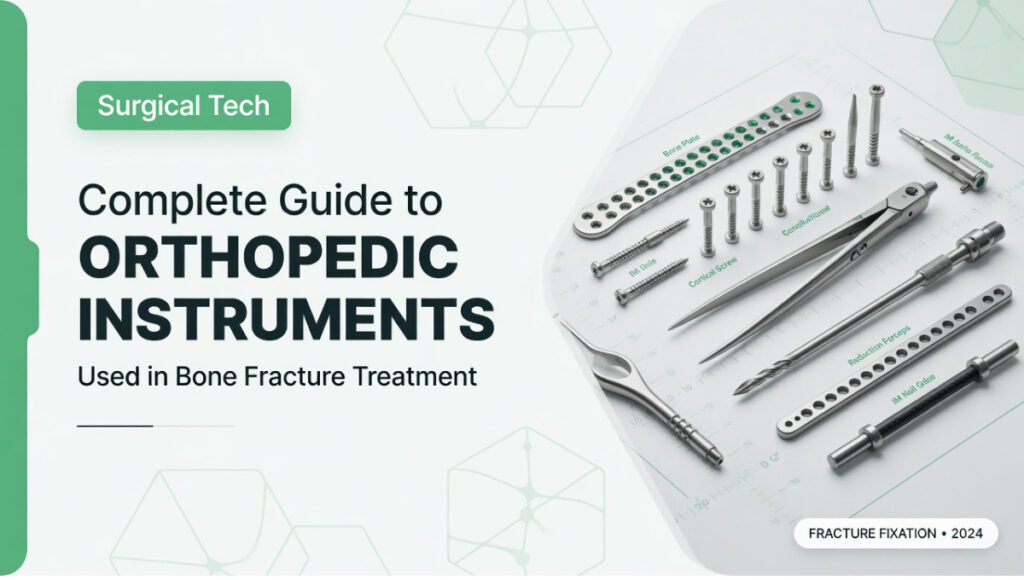
Orthopedic Instruments Used in Bone Fracture Treatment
Orthopedic surgeries are complex procedures. The accurate repositioning and stabilization of fractured bones are critical in orthopedic surgeries. To support this process, surgeons rely on specialized orthopedic instruments. These tools are designed to improve control, alignment, and stability throughout bone fracture repair. Here’s a quick overview of orthopedic instruments, their types, and uses in fracture fixation procedures.
What Are Orthopedic Instruments?
Orthopedic instruments are far more than just nails and screws. They are special orthopedic surgical tools used in procedures involving the musculoskeletal system. These tools are used to repair bones, joints, ligaments, tendons, and muscles. Orthopedic instruments are made of medical-grade stainless steel or titanium. Below are the types of essential orthopedic tools used in bone fracture management procedures.
Types of Bone Fracture Management Instruments
It takes time for a bone fracture to heal. The precision of the surgical process is the key to a successful recovery. There are different types of bone surgery instruments that assist surgeons in repairing and stabilizing damaged bones during orthopedic procedures.
All of the instruments used in orthopedic surgery have a particular purpose. Some are designed to cut through dense bone tissue, and others are used to keep broken pieces of bone in place or to position implants during orthopedic surgeries. Since bone is one of the hardest tissues in the human body, these instruments must perform consistently under demanding surgical conditions while supporting patient safety.
Manufactured to medical-grade standards, orthopedic tools are specially designed for bone fixation, reconstruction, and grafting procedures. Their importance is vital to stable outcomes and aids in the proper healing of the bone.
Below are the essential tools most commonly used in orthopedic bone fracture treatment.
-
Bone Holding Forceps
During fracture surgeries, it is important to keep bone fragments in place. The fragment immobilization helps surgeons perform reconstruction surgeries precisely. Bone-holding forceps have a special handle and serrated jaws to hold the bone securely. These are also called bone clamps.
These fracture fixation devices facilitate the correct alignment and positioning of the broken pieces of bone. Furthermore, its anti-slip design provides optimum control during orthopedic surgeries.
Applications:
- Stabilizing fractured bones during surgical repair
- Restoring bone fragments to their natural anatomical alignment
- Applying controlled compression to support bone healing
- Assisting with bone manipulation and precise positioning during orthopedic procedures
-
Bone Cutting Tools
Bone cutting instruments are used to precisely shape, reshape, or remove bone. These heavy-duty tools help surgeons repair fractures with complete control and minimal trauma. Some of the most common tools they use are bone saws, bone cutting forceps, and osteotomes.
Applications:
- Bone reshaping during fracture repair
- Creating space for orthopedic implants
- Removing damaged or abnormal bone tissue
- Supporting bone grafting and reconstruction procedures
-
Bone Reduction Forceps
Bone reduction forceps are used to align and hold fractured bone fragments in place during orthopedic procedures. They facilitate maintaining a steady position before and during the fixation with plates, screws, or wires. They are used in controlled compression and are an ideal choice for precise handling. Bone reduction forceps are frequently used in trauma and reconstructive surgery.
Applications:
- Aligning displaced bone fragments during fracture repair
- Stabilizing bones before plate or screw fixation
- Assisting in femoral, tibial, and humeral fracture procedures
- Supporting small bone surgeries, including wrist and jaw fractures
-
Orthopedic Plates
Orthopedic plates are implantable fixation devices. They are used to stabilize fractured or misaligned bones during the healing process. Since these plates are implanted directly onto the bone, they are manufactured using biocompatible materials for safe, long-term support. Orthopedic plates help maintain proper bone alignment after surgery. They are available in different shapes and sizes.
Applications:
- Stabilizing fractured bone segments after reduction
- Supporting bone healing during fixation procedures
- Correcting misaligned or deformed bone structures
- Bridging bone gaps and providing compression support
-
Bone Hooks
Bone hooks are used for joint replacement, fracture reduction, and bone realignment. They help surgeons maintain a clear operative field during surgeries. The pointed hooks are also used for bone fragment manipulation in some cases.
Applications:
- Assisting in joint replacement surgeries
- Supporting fracture reduction and bone alignment
- Retracting bone fragments for better surgical access
- Helping in the controlled manipulation of small bone fragments
-
Orthopedic Hand Drill
Orthopedic hand drills are used to create precise holes in bone during fracture repair and implant procedures. These holes allow secure placement of screws, nails, and plates to stabilize broken bone segments and support proper healing.
Applications:
- Drilling bone holes for screws, plates, and nails
- Supporting fracture fixation and stabilization procedures
- Assisting in implant placement during orthopedic surgery
- Shaping bone surfaces for better prosthetic or reconstructive fit
-
Orthopedic Rongeurs
Rongeurs are specialized orthopedic instruments used to remove small pieces of bone during surgery. Designed with a plier-like structure, they allow controlled biting and removal of bone fragments from precise areas.
Applications:
- Removing small bone fragments during surgery
- Trimming or shaping bone in confined spaces
- Assisting in spinal and neurosurgical procedures
- Clearing bone edges to improve surgical access
-
Orthopedic Gouges
Orthopedic gouges are trough-shaped surgical instruments used to remove or scoop out bone tissue during procedures. They are commonly used for clearing diseased bone and preparing areas for grafting and reconstruction.
Applications
- Removing diseased or damaged bone tissue
- Preparing bone surfaces for grafting procedures
- Assisting in reconstructive orthopedic surgery
- Shaping bone areas for improved surgical access
Along with gouges, orthopedic fracture management sets also include instruments such as intramedullary nails, screws, wires, pins, and scissors to support complete stabilization and repair of bone injuries.
General Guidelines for Using Orthopedic Instruments in Fracture Repair
Proper use of orthopedic instruments is very important. Adhering to the standard procedure guarantees precision in the surgery, safety for the patient, and the best results.
- Always verify that all instruments are sterile. They should have undergone proper autoclave processing before each surgical procedure.
- Check all instruments before using for wear, damage, and corrosion. Even slight imperfections may affect the precision of a surgical procedure.
- Select instruments that are specifically sized and suited for the type and location of the fracture being treated.
- Make sure all instruments are set up and tested for operation. Do this prior to the start of surgery.
- To ensure that no instrument is accidentally left in the surgical site, count them before the procedure.
- Only use each instrument for its intended use. Using the wrong instrument for the surgery may result in an instrument malfunction or injury to the patient.
- Use cutting and drilling tools with controlled and measured force to prevent unnecessary trauma to adjacent bone and soft tissue.
- Follow manufacturer guidelines for torque settings on screws and implants to ensure secure and accurate fixation
- Complete documentation of all instruments used during the procedure for after-procedure traceability and quality control.
Conclusion
Orthopedic instruments are essential for successful fracture treatment and bone repair procedures. These precision instruments provide surgeons with better control during surgery. Using high-quality orthopedic instruments is very important for safe and effective outcomes. GerMedUSA provides premium orthopedic instruments designed for fracture repair and management. Along with the right tools, following proper surgical techniques is key to restoring movement, reducing pain, and helping patients return to normal life.
FAQs
What instrument is used in bone surgery?
Bone surgery uses different orthopedic instruments depending on the procedure. Common tools include bone saws for cutting, drills for making holes, reduction forceps for alignment, and implants like plates, screws, and nails for fixation.
What are the 4 A’s of fracture healing?
The 4 A’s of fracture healing refer to key factors that support proper bone recovery:
- Alignment: The bone fragments must be correctly positioned
- Apposition: The broken ends should be in close contact
- Apparatus: Proper fixation devices, such as plates, screws, or casts, are used
- Activity: Controlled movement and weight-bearing as advised to support healing
Together, these ensure stable and effective bone healing.
Are orthopedic instruments reusable?
Yes, most orthopedic instruments are reusable. They are made from high grade stainless steel or other durable materials and are designed to withstand repeated sterilization and surgical use.
What are common orthopedic implants?
Common orthopedic implants include bone plates, screws, intramedullary nails, wires, and pins used to stabilize fractures.
What are small bone reduction forceps?
Small bone reduction forceps are specialized orthopedic instruments used to hold and align small bone fragments during fracture repair. They are commonly used in delicate procedures such as wrist, hand, jaw, and other fine bone surgeries where precise control and stability are required.
References
- American Academy of Orthopaedic Surgeons (AAOS) – Fractures (Broken Bones)
Covers fracture treatment methods, reduction procedures, fixation techniques, and orthopedic surgical management. - AO Foundation – Surgery Reference
Internationally recognized orthopedic trauma reference used by surgeons worldwide for fracture management principles, reduction techniques, and fixation procedures. - GerMedUSA – Bone Holding Forceps
Product reference describing bone holding forceps used for grasping and stabilizing bones during orthopedic surgeries. Features serrated jaws and self-locking handles for fracture restoration. - GerMedUSA – Small Bone Reduction Forceps
Orthopedic reduction forceps designed for precise fracture reduction and stabilization of small bones during orthopedic procedures. - National Center for Biotechnology Information (NCBI) – Fracture Healing Overview
Explains the biological process of fracture healing and principles of bone repair. - Wikipedia – Bone Fracture
Reference for fracture types, bone healing, and surgical treatment approaches. - MedlinePlus – Fractures
U.S. National Library of Medicine resource covering fracture treatment and bone healing basics. - Campbell’s Operative Orthopaedics
- Authors: Frederick M. Azar, S. Terry Canale, James H. Beaty
- Publisher: Elsevier
- One of the most authoritative orthopedic surgery textbooks covering fracture repair, orthopedic instruments, implants, and surgical procedures.
- Rockwood and Green’s Fractures in Adult
- Authors: Charles M. Court-Brown, James D. Heckman, Margaret M. McQueen
- Publisher: Wolters Kluwer
- Widely referenced textbook for adult fracture management and fixation techniques