Surgical Technology Career Paths: Where Can You Grow?

Surgical Technology Career Paths Where Can You Grow
Introduction
Surgical technology is a rewarding healthcare career that combines technical expertise, teamwork, and patient care. Many students and professionals start their journey with a focus on operating room support but may wonder: “What are the long-term career options?”
Understanding career growth in surgical technology is crucial for planning your education, certifications, and professional development. This article explores career paths, specializations, advanced roles, and global opportunities for surgical technologists. It’s designed for medical students, aspiring technologists, and professionals seeking guidance.
Surgical technologists have a variety of career paths, from operating room specialists to surgical educators. For a complete overview of the profession, including responsibilities, salary, and training, see our surgical technologist career guide.
Entry-Level Roles: Starting Your Career
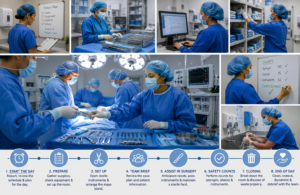
The typical entry point for a surgical technologist is an entry-level OR role, which usually involves:
- Assisting surgeons during operations
- Preparing surgical instruments and sterile fields
- Ensuring patient safety and maintaining hygiene standards
Most entry-level positions require completion of an accredited surgical technology program and, in many countries, certification (e.g., CST in the USA or NHS-recognized certificates in the UK).
Salary and benefits at this stage vary by location, but certification and experience can significantly improve compensation.
Mid-Level Career Opportunities
After gaining experience, surgical technologists can move into mid-level positions with more responsibilities, such as:
- Senior surgical technologist: Oversees OR setup, mentors junior staff
- Specialty technologist: Focuses on areas like orthopedic, cardiovascular, or neurosurgery
- Operating room coordinator: Manages schedules, inventory, and compliance
At this stage, additional certifications or specialty training can boost both career progression and salary. Mid-level roles also provide exposure to leadership, planning, and teaching opportunities within healthcare facilities.
Advanced and Specialized Roles
Experienced surgical technologists can pursue advanced or specialized career paths, which often require additional education, certifications, or hands-on experience:
1. Surgical First Assistant (CSFA)
- Works closely with surgeons to perform tissue handling, suturing, and assisting in procedures
- Requires advanced certification and experience
- Opens doors to higher pay and specialized surgical teams
2. Robotic Surgery Specialist
- Operates and supports robot-assisted surgeries
- Requires specialized training and understanding of advanced surgical technology
- High demand in modern hospitals, especially in cardiac, orthopedic, and urology departments
3. Operating Room Manager / Supervisor
- Oversees OR operations, staff scheduling, and compliance
- Often requires leadership experience and professional certifications
- Involves less direct surgery assistance but more administrative and coordination responsibilities
Teaching and Training Roles
Experienced surgical technologists can move into education and training roles, including:
- Clinical instructors at accredited programs
- Hospital-based trainers for new staff or technology integration
- Workshop facilitators for specialty or certification courses
Teaching roles require strong communication skills, a deep understanding of surgical procedures, and hands-on experience. They also enhance your professional reputation and can lead to further career opportunities.
Transitioning to Other Healthcare Roles
Surgical technologists often transition to related healthcare careers, including:
- Registered Nurse (RN): Using OR experience to specialize in perioperative nursing
- Physician Assistant (PA): Leveraging surgical knowledge in clinical care
- Healthcare Administration: Using experience in OR operations for hospital management
These transitions may require additional education but are a natural step for those seeking long-term career growth and higher income.
Global Career Opportunities
Surgical technologists can also explore international opportunities, especially with certifications recognized worldwide:
- USA: CST and CSFA certifications are widely accepted
- UK & Europe: NHS-recognized training is highly valued
- Middle East, Canada, Asia: Hospitals often prefer certified technologists for specialized surgical teams
Working internationally may require additional credential verification, language proficiency, and familiarity with local healthcare regulations. However, it can enhance both professional experience and salary potential.
Skills That Promote Career Growth
To grow professionally, surgical technologists need a combination of technical and soft skills:
Technical Skills
- Mastery of surgical instruments and equipment
- Understanding OR protocols and infection control
- Ability to support robotic or specialty surgeries
Soft Skills
- Leadership and mentoring abilities
- Communication and teamwork in high-pressure situations
- Critical thinking and problem-solving
Investing in skill development, certifications, and experience directly influences career trajectory and earning potential.
Continuing Education: A Key to Advancement
The healthcare field constantly evolves. Surgical technologists who engage in continuing education maintain relevance and improve career prospects. Examples include:
- Specialty workshops (robotic, orthopedic, cardiovascular surgery)
- Certification renewal courses
- Online courses in patient safety, OR management, or advanced procedures
- Continuing education is not just a requirement—it is a strategic tool for growth.
Common Mistakes in Career Planning
Many surgical technologists make avoidable mistakes that slow career growth:
- Focusing only on entry-level work without long-term planning
- Ignoring certifications and specialized training
- Avoiding leadership or teaching opportunities
- Not building a professional network within hospitals or professional associations
Avoiding these pitfalls ensures steady career growth and opens doors to high-responsibility roles.
(FAQs)
What is the typical career ladder for a surgical technologist?
Entry-level OR technologist → Senior or Specialty Technologist Surgical First Assistant / OR Manager → Teaching or International Opportunities.
Do I need advanced certification to specialize in robotic surgery?
Yes, specialized training and certifications are generally required for robotic surgery.
Can surgical technologists move into management roles?
Absolutely. With experience and leadership training, technologists can become OR managers or supervisors.
Is it worth pursuing international opportunities?
Yes. International work can provide higher salaries, exposure to advanced surgical technology, and career growth.
How can I increase my salary as a surgical technologist?
Obtain certifications, specialize in high-demand surgical areas, pursue leadership roles, and gain international experience.
Final Thoughts
Surgical technology is not just a job—it’s a career with multiple pathways and growth potential. From entry-level OR roles to advanced specialties, teaching, and international work, surgical technologists have many options to shape their professional journey.
For medical students and aspiring technologists, understanding the career ladder, required skills, and certifications is key to making informed decisions. With the right training, dedication, and strategic planning, a career in surgical technology can be highly rewarding, both professionally and financially.
Disclaimer:
”The information provided on this website is for general informational and educational purposes only. All content is published in good faith and is intended to offer helpful guidance to readers worldwide. However, we make no guarantees about the completeness, reliability, or accuracy of the information presented.”