Latest Surgical Technology Updates in the USA & UK
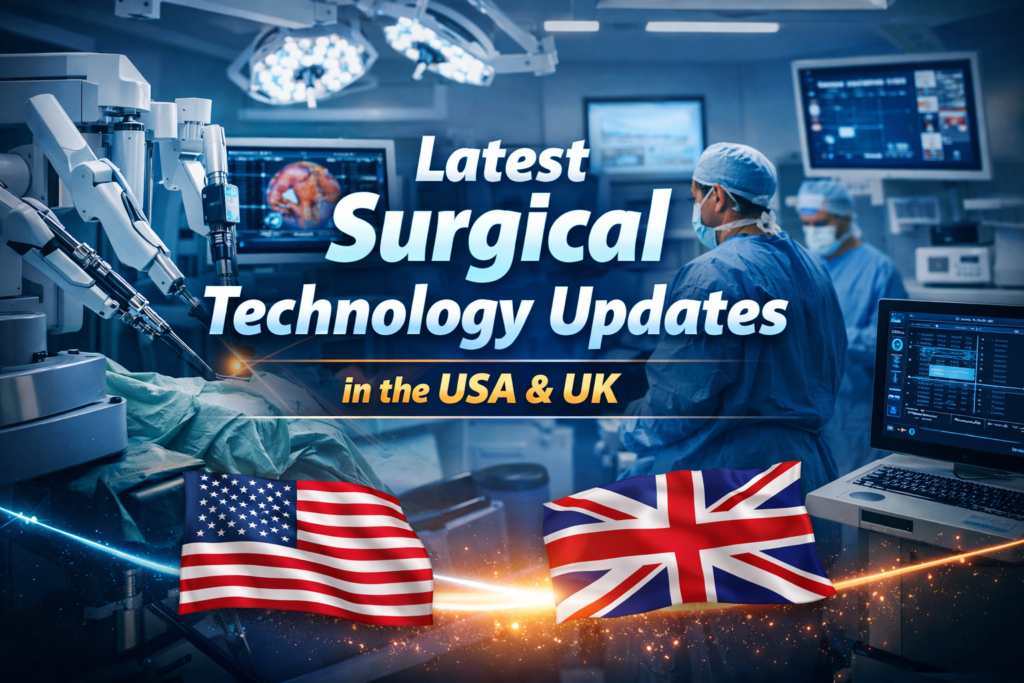
Modern surgical technology transforming operating rooms across the USA and UK through robotics, AI, and digital innovation.
Introduction
Surgical technology is advancing at an unprecedented pace in both the United States and the United Kingdom. Hospitals, surgical centers, and healthcare systems are rapidly adopting innovative tools to improve patient outcomes, reduce surgical risks, and enhance operational efficiency. From robotic-assisted surgery to artificial intelligence (AI), modern operating rooms are becoming smarter, safer, and more precise.
In this article, we explore the latest surgical technology updates in the USA and UK, focusing on innovations that are reshaping the future of surgery for surgeons, surgical technologists, healthcare professionals, and medical students.
The Growing Importance of Surgical Technology in Modern Healthcare
Surgical technology plays a critical role in improving patient safety, surgical accuracy, and recovery times. Both the US healthcare system and the UK’s National Health Service (NHS) are investing heavily in advanced surgical solutions to meet increasing patient demand and complex medical challenges.
Key goals of modern surgical technology include:
- Minimally invasive procedures
- Faster patient recovery
- Reduced surgical complications
- Enhanced precision and control
- Improved training for surgical staff
Robotic-Assisted Surgery: Leading the Transformation
Robotic Surgery in the USA
Robotic-assisted surgery continues to dominate surgical innovation in the United States. Advanced robotic systems allow surgeons to perform highly precise procedures with enhanced visualization and control. These systems are widely used in:
General surgery
- Orthopedics
- Urology
- Gynecology
- Cardiothoracic surgery
Benefits include smaller incisions, reduced blood loss, and shorter hospital stays.
Robotic Surgery Expansion in the UK
In the UK, the NHS is rapidly expanding robotic surgery programs. Several NHS hospitals now use robotic systems for colorectal, prostate, and minimally invasive procedures. Government-backed funding initiatives aim to increase access to robotic surgery nationwide, improving surgical outcomes and reducing waiting times.
Artificial Intelligence (AI) in Surgical Procedures
AI-Powered Surgical Planning
Artificial intelligence is revolutionizing how surgeries are planned and executed. AI algorithms analyze medical imaging, patient data, and surgical history to assist surgeons in making more accurate decisions before entering the operating room.
AI in the Operating Room
In both the USA and UK, AI-powered tools are being used to:
- Predict surgical risks
- Monitor real-time surgical performance
- Reduce human error
- Improve post-operative outcomes
AI integration is particularly beneficial in complex surgeries where precision and timing are critical.
Minimally Invasive Surgery (MIS): A Standard of Care
Advancements in Laparoscopic Technology
Minimally invasive surgery continues to evolve with improved laparoscopic instruments, high-definition cameras, and advanced energy devices. These tools allow surgeons to operate through tiny incisions with greater accuracy.
Benefits for Patients
Patients undergoing minimally invasive procedures experience:
- Less pain
- Shorter recovery times
- Lower infection risk
- Reduced scarring
Both US and UK hospitals prioritize MIS as it reduces healthcare costs and improves patient satisfaction.
Smart Surgical Instruments and Devices
Intelligent Surgical Tools
Smart surgical instruments equipped with sensors and digital feedback are becoming more common. These tools provide real-time data on pressure, temperature, and tissue response, helping surgeons make safer decisions during procedures.
Adoption in USA & UK Hospitals
Leading hospitals in the USA and UK are adopting smart devices to:
- Enhance surgical precision
- Improve safety standards
- Support advanced training programs
These innovations are especially useful for complex and delicate surgeries.
Augmented Reality (AR) and Virtual Reality (VR) in Surgery
AR in Surgical Navigation
Augmented reality technology overlays digital images onto the surgeon’s view, allowing better visualization of internal anatomy. AR-assisted surgery is gaining popularity in neurosurgery, orthopedics, and reconstructive procedures.
VR for Surgical Training
Virtual reality is widely used in surgical education across the USA and UK. VR-based simulations help surgical trainees practice procedures in a safe, risk-free environment, improving skill development and confidence.
3D Printing in Surgical Applications
Custom Surgical Implants
3D printing technology enables the creation of patient-specific implants and prosthetics. Surgeons can now use customized solutions for orthopedic, dental, and reconstructive surgeries.
Surgical Planning Models
In both countries, 3D-printed anatomical models are used to plan complex surgeries. These models help surgeons visualize procedures more accurately, reducing operative time and risks.
Advanced Infection Control Technologies
Sterilization Innovations
Preventing surgical site infections remains a top priority. Advanced sterilization systems and antimicrobial surgical tools are now widely used in operating rooms across the USA and UK.
Smart Monitoring Systems
Hospitals are implementing smart monitoring technologies that track operating room cleanliness, airflow, and equipment sterilization in real time. These systems significantly reduce infection risks.
Digital Operating Rooms: The Future Standard
Integrated OR Systems
Digital operating rooms integrate surgical devices, imaging systems, and patient data into a single platform. Surgeons can control equipment seamlessly, improving efficiency and communication.
Benefits for Surgical Teams
- Digital ORs improve:
- Workflow efficiency
- Team coordination
- Patient safety
- Data-driven decision-making
Many hospitals in the USA and UK are transitioning to fully digital operating rooms.
Impact on Surgical Technologists and Healthcare Careers
Rising Demand for Skilled Professionals
With the adoption of advanced surgical technologies, demand for trained surgical technologists is increasing in both the USA and UK. Professionals must stay updated with:
- Robotic systems
- Digital surgical tools
- Infection control standards
- AI-assisted technologies
- Career Growth Opportunities
Surgical technologists and healthcare professionals with advanced technical skills have better career prospects, higher salaries, and international opportunities.
Challenges in Adopting New Surgical Technologies
Despite rapid innovation, challenges remain:
- High equipment costs
- Training requirements
- Integration with existing systems
- Regulatory approvals
Healthcare systems in both countries are working to balance innovation with affordability and accessibility.
Future Trends in Surgical Technology
Looking ahead, surgical technology in the USA and UK is expected to focus on:
- Increased automation
- AI-driven decision support
- Remote and telesurgery
- Enhanced patient personalization
- Sustainable surgical solutions
These advancements will continue to improve surgical care worldwide.
Conclusion
The latest surgical technology updates in the USA and UK highlight a future driven by innovation, precision, and patient-centered care. From robotic surgery and AI to smart instruments and digital operating rooms, modern surgical practices are evolving rapidly.
For surgeons, surgical technologists, and healthcare professionals, staying informed about these advancements is essential. As technology continues to reshape surgery, those who adapt and learn will play a vital role in the future of global healthcare.