Surgical Instruments Names and Uses: Complete Guide for Beginners (2026)
Surgical Instruments Names and Uses Complete Guide for Beginners (2026)
Introduction
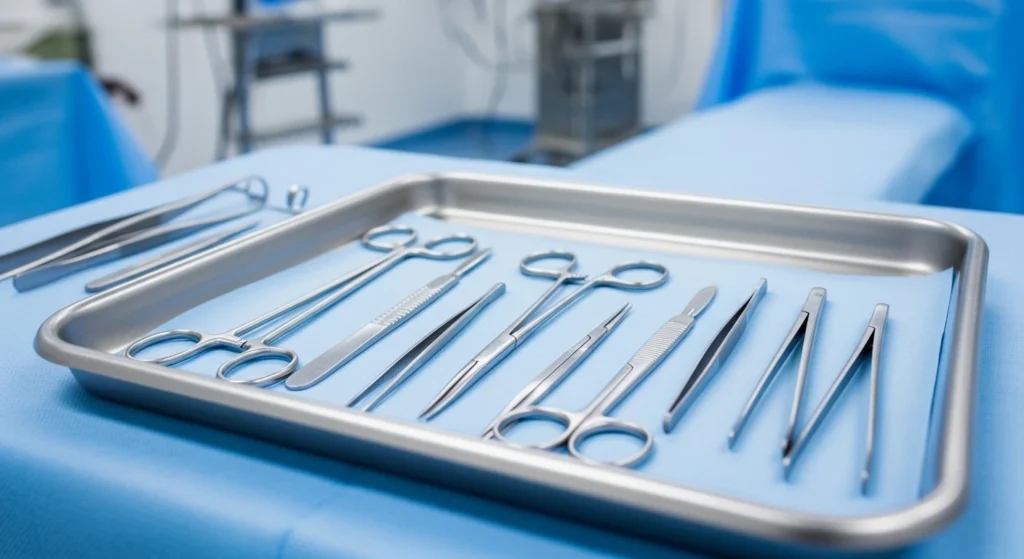
If you’ve ever walked into an operation room—even just in movies—you’ve probably noticed a tray full of shiny tools laid out in perfect order. Those are surgical instruments, and each one has a very specific job. Simply put, these are tools used by doctors and medical professionals to perform procedures like cutting, holding, stitching, or examining parts of the body. Think of them as the “toolkit” of a surgeon, just like a mechanic has wrenches and screwdrivers.
Now, here’s something interesting: surgical instruments aren’t random. Every curve, edge, and handle is carefully designed for a purpose. For example, some tools are made to be extremely sharp for precise cuts, while others are designed to gently hold tissues without causing damage. It’s kind of like using different knives in a kitchen—you wouldn’t use a bread knife to peel an apple, right?
For beginners, the world of surgical tools can feel overwhelming because there are hundreds of them. But don’t worry—once you understand the basic categories and their uses, everything starts to make sense. This guide is designed to help you break it all down in a simple, human-friendly way so you can actually remember what each tool does.
Why Are Surgical Tools Important in Healthcare?
Imagine trying to fix something delicate, like repairing a watch, using only your hands. Sounds impossible, right? That’s exactly why surgical instruments are essential in healthcare. They allow doctors to perform procedures safely, accurately, and efficiently.
These tools play a huge role in saving lives. Whether it’s a simple stitch or a complex operation, the right instrument makes all the difference. A well-designed tool reduces the chances of mistakes, speeds up procedures, and helps patients recover faster. It’s not just about doing the job—it’s about doing it the right way.
Another key reason they matter is precision. In surgery, even a tiny mistake can have serious consequences. Instruments are designed to give surgeons full control, helping them work in small, sensitive areas without causing unnecessary harm. It’s like using a fine-tip pen instead of a marker when drawing details.
Also, surgical instruments help maintain hygiene and safety. Most of them are made from materials that can be sterilized, which prevents infections. In modern healthcare, this is non-negotiable. Clean tools mean safer procedures and better outcomes for patients.
Basic Categories of Surgical Instruments
Before diving into specific names, it’s easier to understand surgical tools by grouping them into categories. Think of it like organizing your phone apps—you don’t memorize each one randomly; you group them by function.
Cutting Instruments
These are the tools used to cut tissues, skin, or other materials during a procedure. The most common example is the scalpel, which is basically a super-sharp blade. Cutting instruments are designed to make clean, precise cuts, which helps reduce damage and speeds up healing.
Grasping and Holding Instruments
These tools are used to hold tissues or objects during surgery. For example, forceps act like tweezers, allowing doctors to pick up or stabilize delicate tissues. Without these, it would be almost impossible to work inside the body without causing harm.
Clamping Instruments
Clamps are used to control bleeding by holding blood vessels shut. Imagine turning off a water tap to stop flow—that’s what clamps do inside the body. They’re essential for maintaining a clear surgical field.
Retracting Instruments
Retractors are used to hold back tissues or organs so surgeons can see the area they’re working on. Think of them like someone holding a curtain open so you can look inside a room. They improve visibility and make procedures much easier.
Common Surgical Instruments Names and Uses
Let’s break down some of the most commonly used tools in a way that’s easy to remember.
Scalpel
The scalpel is probably the most recognized surgical instrument. It’s a small, sharp knife used to make precise cuts. What makes it special is its ability to create clean incisions, which helps in faster healing and less scarring.
Scalpels come in different sizes and blade shapes depending on the type of surgery. Some are used for very fine work, while others are meant for deeper cuts. It’s not just about sharpness—it’s about control.
Surgical Scissors
These aren’t your regular household scissors. Surgical scissors are designed for cutting tissues, sutures, or even bandages. Some are straight, while others are curved to reach difficult areas.
Doctors choose the type of scissors based on what they need to cut. For example, delicate tissues require fine scissors, while tougher materials need stronger ones.
Forceps
Forceps are like precision tweezers. They’re used to grab, hold, or move tissues. Some have smooth tips, while others have tiny teeth for better grip.
They’re incredibly versatile and used in almost every procedure. If you had to compare them, they’re like your fingers—but much more precise and controlled.
Needle Holder
A needle holder is used to hold a needle while stitching wounds. It provides a firm grip, making it easier for surgeons to sew tissues together.
Without this tool, stitching would be extremely difficult and less accurate. It’s one of those instruments that quietly does an important job.
Retractors
Retractors help keep tissues open so surgeons can see clearly. Some are handheld, while others are self-retaining.
They might not look fancy, but they’re essential. Good visibility is everything in surgery, and retractors make that possible.
Specialized Surgical Instruments
Not all surgeries are the same, which means some tools are designed for specific fields.
Orthopedic Instruments
These tools are used for bone-related procedures. They include drills, hammers, and saws designed specifically for bones.
Dental Surgical Tools
Dental instruments are smaller and designed for working inside the mouth. Tools like probes and scalers help dentists perform procedures safely.
Gynecological Instruments
These are used in women’s health procedures. They are designed to be gentle and precise, ensuring patient comfort and safety.
How to Identify Surgical Instruments Easily
Tips for Beginners
Learning instrument names can feel like memorizing a new language. But here’s a trick—focus on shape and function. Most tools are named based on what they do or how they look.
For example, anything that looks like scissors probably cuts. Tools that look like tweezers usually hold or grasp. Once you start noticing patterns, it becomes much easier.
Another helpful tip is repetition. The more you see and use these instruments, the more familiar they become. It’s just like learning to recognize faces—you don’t memorize features; you get used to them.
Materials Used in Surgical Instruments
Most surgical instruments are made from stainless steel, and there’s a good reason for that. It’s strong, durable, and resistant to rust. More importantly, it can be sterilized without getting damaged.
Some tools also include plastic or titanium parts, depending on their use. Titanium is lightweight and strong, making it ideal for delicate procedures.
The choice of material isn’t random—it’s all about safety, durability, and performance.
Sterilization and Safety of Instruments
Cleanliness is everything in healthcare. Surgical instruments must be sterilized before and after use to prevent infections.
Sterilization usually involves high heat, chemicals, or special machines that kill bacteria and viruses. It might sound simple, but it’s a critical step that protects both patients and medical staff.
Choosing the Right Surgical Instruments
Choosing the right tool isn’t just about preference—it’s about the procedure. Each surgery requires specific instruments, and using the wrong one can lead to complications.
Doctors consider factors like size, shape, and function before selecting an instrument. It’s a careful process that ensures everything goes smoothly.
Beginner Mistakes to Avoid
One common mistake is trying to memorize everything at once. That rarely works. Instead, focus on understanding the purpose of each tool.
Another mistake is ignoring proper handling. Even simple tools can cause damage if used incorrectly. Practice and guidance are key.
Conclusion
Understanding surgical instruments names and uses doesn’t have to be complicated. Once you break them down into categories and learn their basic functions, everything starts to click. These tools are the backbone of modern healthcare, helping doctors perform procedures safely and effectively.
For beginners, the key is to stay curious and keep learning. With time, what once felt overwhelming will start to feel familiar—even intuitive.
FAQs
What is the most commonly used surgical instrument?
The scalpel is one of the most commonly used instruments because it’s essential for making precise cuts in almost every procedure.
Are all surgical instruments made of steel?
Most are made of stainless steel, but some include materials like titanium or plastic for specific purposes.
How do doctors remember so many instruments?
They learn through practice, repetition, and understanding the function of each tool rather than memorizing names alone.
Can surgical instruments be reused?
Yes, many are reusable but must be properly sterilized before each use to ensure safety.
Are surgical instruments the same worldwide?
Yes, most instruments are standardized globally, although slight variations may exist depending on the region or manufacturer.
Disclaimer
“This article is for educational and informational purposes only. It is written in a simplified manner for beginners and does not replace professional medical training or advice. Always consult qualified healthcare professionals for accurate guidance and practical use of surgical instruments.”