The Future of AI in Surgery — Benefits, Risks, and Real-World Applications

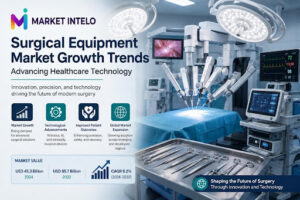
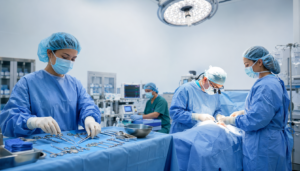
AI and robotic technology are transforming modern surgery by improving precision, patient safety, and clinical outcomes.
Artificial Intelligence (AI) is transforming modern healthcare, and one of its most promising frontiers is surgery. From robotic-assisted operations to predictive analytics and post-operative care, AI is reshaping how surgeons plan, perform, and evaluate surgical procedures. The integration of AI in surgery is not just a technological upgrade — it represents a major shift toward precision medicine, patient safety, and smarter clinical decision-making.
In this in-depth guide, we explore the future of AI in surgery, focusing on its benefits, risks, ethical challenges, and real-world applications already improving patient outcomes across the globe.
What Is AI in Surgery? A Brief Overview
AI in surgery refers to the use of machine learning, deep learning, computer vision, robotics, and data-driven algorithms to enhance surgical workflows. Instead of replacing surgeons, AI acts as a supportive and augmentative tool that assists with:
- Pre-operative planning
- Real-time guidance during surgery
- Risk prediction and patient monitoring
- Post-operative recovery and analytics
Some key technologies driving AI-powered surgery include:
- Robotic-assisted surgical systems
- Intelligent imaging and diagnostics
- Augmented and virtual reality surgical guidance
- Predictive analytics and clinical decision support
- Autonomous surgical tools (emerging research)
Together, these innovations are helping surgeons perform safer, faster, and more accurate procedures than ever before.
How AI Is Transforming Modern Surgery
1. AI-Powered Pre-Operative Planning
Before a surgery begins, surgeons must analyze medical images, patient history, and anatomical structures. AI enhances this process by:
- Automatically detecting abnormalities in CT scans, MRIs, and X-rays
- Creating 3D anatomical models for practice and simulation
- Predicting potential complications before surgery
- Personalizing surgical plans for individual patients
Machine learning systems can analyze thousands of past procedures to suggest optimal surgical strategies, improving both safety and outcomes.
2. Robotic-Assisted and AI-Guided Surgery
Robotic surgery has evolved dramatically with AI integration. Modern systems enhance surgeon precision by:
- Reducing hand tremors and improving instrument control
- Providing high-definition 3D visualization
- Enabling minimally invasive procedures with tiny incisions
- AI-guided robotic systems can:
- Track instrument position in real-time
- Assist with delicate movements
- Suggest safer cutting or stitching pathways
Minimally invasive AI-assisted surgery often results in:
- Less blood loss
- Shorter hospital stays
- Faster patient recovery
- Lower risk of complications
This is especially impactful in specialties like cardiac surgery, neurosurgery, urology, and orthopedics.
3. AI in Intraoperative Decision-Making
During surgery, real-time decisions can be critical. AI systems support surgeons by:
- Highlighting anatomical structures on live video
- Identifying tumors or blood vessels during operation
- Monitoring vital signs and predicting sudden complications
For example, computer vision technology can differentiate between healthy and cancerous tissue, enabling more precise tumor removal while preserving surrounding organs.
4. AI for Post-Operative Care and Recovery
AI continues to play a role even after surgery is complete. Hospitals are now using AI tools to:
- Monitor wound healing through image analysis
- Predict infections before visible symptoms appear
- Track patient recovery trends using wearable devices
- Provide remote monitoring and tele-surgery follow-ups
Predictive analytics help clinicians identify patients at higher risk of readmission, enabling early interventions and improved long-term outcomes.
Key Benefits of AI in Surgery
Greater Accuracy and Precision
AI improves surgical precision through:
- Enhanced visualization
- Real-time guidance
- Data-driven decision support
- This leads to safer procedures and fewer surgical errors.
Reduced Surgical Risk and Complications
AI can analyze patient risk factors to:
- Predict bleeding, infection, or anesthesia reactions
- Suggest preventive strategies
- Improve patient safety protocols
As a result, patients benefit from higher survival rates and better recovery outcomes.
Shorter Recovery Times and Less Trauma
Minimally invasive AI-assisted techniques:
- Require smaller incisions
- Cause less tissue damage
- Reduce pain and scarring
This translates into quicker discharge and faster return to daily life.
Smarter Training for Surgeons
AI-powered simulators and virtual reality systems allow surgical trainees to:
- Practice complex procedures safely
- Receive performance scoring and feedback
- Learn faster through realistic simulations
This improves global surgical education and skill development.
Real-World Applications of AI in Surgery
AI is already being used in hospitals worldwide across multiple specialties.
AI in Orthopedic Surgery
- Robotic joint replacements
- AI-guided bone alignment
- Predictive tools for implant success rates
AI in Neurosurgery
- High-precision brain mapping
- Tumor boundary detection
- Navigation assistance in delicate brain operations
AI in Cancer and Oncologic Surgery
- AI-assisted tumor localization
- Margin detection during removal
- Personalized surgical care plans
AI in Cardiovascular Surgery
- Robotic coronary bypass techniques
- Real-time blood flow analysis
- Predictive tools for heart surgery risk management
These applications demonstrate that AI is not futuristic — it is already here and evolving rapidly.
Risks and Ethical Challenges of AI in Surgery
While AI offers major advantages, it also presents challenges that must be addressed responsibly.
Data Privacy and Security Concerns
AI relies on large volumes of patient data, which increases concerns about:
- Data breaches
- Unauthorized access
- Ethical data usage
Hospitals must implement strong cybersecurity standards and transparent data policies.
Risk of Over-Reliance on Technology
AI should support — not replace — human surgeons. Over-dependence may lead to:
- Reduced manual skill development
- Potential system failure risks
- Human-machine miscommunication
- Clear human-in-the-loop oversight remains essential.
Bias and Inequality in AI Algorithms
If AI systems are trained on limited or biased data, they may produce inaccurate results for:
- Underserved populations
- Diverse ethnic or genetic groups
- Global patient demographics
Developers must ensure inclusive, diverse, and ethical dataset training.
Regulatory and Legal Challenges
Questions still remain about:
- Responsibility in case of AI-related surgical errors
- Licensing and approval of AI surgical systems
- International safety standards
Clear global regulations are needed as AI adoption grows.
The Future of AI in Surgery — What’s Next?
The next decade will bring even more transformative developments, including:
- Semi-autonomous surgical systems for repetitive tasks
- Digital twin patient modeling for personalized surgery simulation
- AI-driven operating rooms with fully integrated smart devices
- Global tele-surgery through robotic and remote systems
- Real-time genomics-based surgical decision-making
Rather than replacing surgeons, AI will continue to function as a powerful collaborator, enhancing surgical intelligence and expanding access to quality healthcare worldwide.
Final Thoughts
The future of AI in surgery is promising, dynamic, and deeply transformative. By improving accuracy, reducing risk, and supporting smarter decision-making, AI has the potential to redefine surgical care on a global scale. However, ethical responsibility, transparency, and human oversight must guide its development to ensure that technology truly serves both patients and medical professionals.
As AI continues to evolve, one thing is clear — the operating room of the future will be smarter, safer, and more connected than ever before.