
How Long Does It Take to Become a Surgical Technologist? A Complete Timeline Guide
How Long Does It Take to Become a Surgical Technologist A Complete Timeline Guide
Introduction
One of the most common questions students ask before choosing a healthcare career is how long it will take to become qualified. This question is especially important for individuals who want to enter the medical field without spending many years in education.
Surgical technology is often considered an attractive option because it offers a faster path into the healthcare workforce while still providing meaningful involvement in surgical care. However, the exact time required to become a surgical technologist can vary depending on education choices, training pathways, and certification requirements.
This article explains how long it takes to become a surgical technologist, step by step, in a clear and realistic way. It is written for medical students, healthcare aspirants, and professionals who want accurate career planning information.
Understanding the Path to Becoming a Surgical Technologist
Becoming a surgical technologist is not a single-step process. It involves a combination of formal education, hands-on clinical training, and in some regions, professional certification.
The timeline is generally shorter than many other healthcare careers, but it still requires commitment, discipline, and practical learning. Most students can complete the process within one to two years, depending on the chosen program.
Meeting Basic Entry Requirements
Before enrolling in a surgical technology program, students must meet basic academic and personal requirements. These requirements ensure that candidates are prepared for the demands of operating room work.
Typical entry requirements include:
- Completion of secondary education or equivalent
- Basic understanding of science subjects
- Ability to meet physical and health standards
Some institutions may also require background checks or basic health screenings before admission.
Choosing the Right Education Program
The length of time required to become a surgical technologist depends largely on the type of education program chosen. These programs are designed to prepare students for real operating room environments.
Most education paths fall into the following categories:
- Certificate or diploma programs
- Associate degree programs
Certificate or diploma programs are usually shorter and focus mainly on practical skills. Associate degree programs take longer but may offer broader academic exposure.
Time Required for Education and Training
Education programs for surgical technology typically take between 12 and 24 months to complete. Shorter programs may be completed in about one year, while more comprehensive programs may take up to two years.
During this time, students divide their learning between classroom instruction and hands-on training. Classroom learning focuses on understanding surgical procedures, safety practices, and professional responsibilities. Practical training allows students to gain experience in real or simulated operating room settings.
The balance between theory and practice is essential, as surgical technology is a hands-on profession.
Clinical Training and Practical Experience
Clinical training is one of the most important parts of becoming a surgical technologist. This phase allows students to apply their knowledge in real healthcare environments under supervision.
Clinical training usually takes place in hospitals or surgical centers. Students observe surgeries, assist experienced professionals, and gradually take on more responsibilities. This stage helps build confidence, discipline, and practical understanding of operating room dynamics.
The length of clinical training varies but is often included within the education program timeline.
Certification and Credentialing
In many regions, certification is not legally required but is strongly recommended. Certification demonstrates professional competence and can improve job opportunities.
Preparing for certification exams may take additional time after completing an education program. Some students choose to prepare alongside their studies, while others take a few months after graduation.
Although certification adds time to the overall process, it can significantly enhance career prospects and professional credibility.
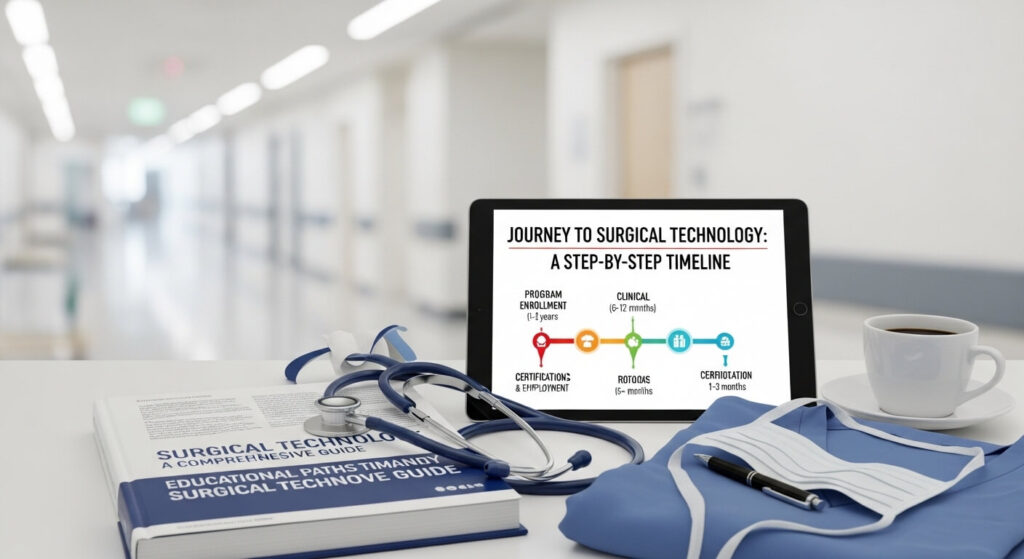
Overall Timeline Summary
To provide a clear picture, here is a general timeline for becoming a surgical technologist:
- Entry requirements: Depends on prior education
- Education program: 12–24 months
- Clinical training: Included within education
- Certification preparation: Optional but recommended
For most students, the total time ranges from 1 to 2 years from enrollment to workforce entry.
Can the Timeline Be Shortened?
Some students wonder whether it is possible to become a surgical technologist faster. While shortcuts should be avoided, certain factors can influence the timeline.
Students who enroll in accelerated programs or already have healthcare-related education may complete training more quickly. However, rushing the process is not recommended, as operating room work requires strong preparation and confidence.
Quality training is more important than speed in this profession.
Part-Time and Flexible Study Options
Not all students can study full-time. Some education providers offer part-time or flexible schedules that allow students to balance work and study.
Part-time programs take longer to complete but provide flexibility for working professionals. The overall timeline may extend beyond two years in such cases, but the final qualification remains the same.
Transitioning From Student to Professional
After completing education and training, new surgical technologists typically begin in entry-level roles. The transition from student to professional involves adapting to real work schedules, responsibilities, and team dynamics.
The first few months of employment are often considered a learning phase. With experience, confidence and efficiency improve significantly.
Is the Time Investment Worth It?
For many individuals, the time required to become a surgical technologist is considered reasonable compared to the career benefits. The relatively short education period allows students to enter the healthcare workforce quickly and start gaining professional experience.
Medical students exploring alternative healthcare roles and professionals seeking specialization may find this timeline especially attractive.
Common Misunderstandings About Training Time
Some people assume that surgical technology requires many years of education, similar to medical or nursing careers. In reality, the training period is much shorter and more focused.
Others believe that shorter training means lower responsibility. In fact, surgical technologists carry significant responsibility in operating rooms, regardless of the length of education.
(FAQs)
How long does it take to become a surgical technologist after high school?
Most students can complete education and training within 1 to 2 years after meeting entry requirements.
Is certification mandatory to work?
Certification is not always required but is highly recommended for better job opportunities.
Can I study surgical technology part-time?
Yes, some programs offer part-time options, though they take longer to complete.
Is clinical training included in the program?
Yes, most programs include clinical training as part of the curriculum.
Can medical students switch to surgical technology?
Yes, medical students can transition, though they must complete a recognized surgical technology program.
Final Thoughts
Becoming a surgical technologist does not require many years of education, but it does require dedication, discipline, and hands-on learning. For individuals seeking a faster entry into healthcare without sacrificing professional value, surgical technology offers a practical and rewarding path. To learn more about the career path, skills required, and opportunities for surgical technologists, explore our complete guide to surgical technologists.
For medical students and healthcare aspirants planning their future, understanding the timeline clearly can help make informed and confident career decisions.
Disclaimer:
”The information provided on this website is for general informational and educational purposes only. All content is published in good faith and is intended to offer helpful guidance to readers worldwide. However, we make no guarantees about the completeness, reliability, or accuracy of the information presented.”